Where are they now?

You’ll see yourself in these graduate stories.

Stories from Toivoa Coaching Academy graduates and coaches: teachers, nurses, managers, fitness pros and HR leaders have all found that their past experience is a foundation, not a limit.

Hear from our graduates

“I want to be able to provide services for populations that may not have the ability to access the same services.”
Aaron, Toivoa Coaching Academy graduate

AaronToivoa Coaching Academy graduate

“I loved that the course was definitely trauma-informed, that it had a lot of accessibility and it had a lot of flexibility.”
Nakia, Toivoa Coaching Academy graduate

NakiaToivoa Coaching Academy graduate

“I wanted to integrate my spiritual and intuitive healing gifts with my professional experience, something heart-centered.”
Brittany, Toivoa Coaching Academy graduate

BrittanyToivoa Coaching Academy graduate

“With each class I not only grew more confident because of the coursework, but received confirmation that this work lit me up.”
Maeve, Toivoa Coaching Academy graduate

MaeveToivoa Coaching Academy graduate

Coach conversations

Real graduates and coaches talking about their experience with the Toivoa Coaching Academy program.

Meet Abeeb, Toivoa Mental Health Coach

Captions are shown in the video.

Read the transcript

Laura Randa: But thank you again for spending some time with us. And we’d really like to just uncover a little bit about who is Abeeb, and what was so important that made you decide to do this work with coaching? And why Toivoa Coaching?

Abeeb: So it’s funny that you asked that. So my first experience with Toivoa Coaching was actually during the practicum of another student. We got connected and I was looking to receive some health coaching, because it was always something I was interested in. And I thought to myself, if I’m interested in it, it’s probably a good idea that I receive some health coaching first. And while working with the health coach, I knew immediately, based on how she conducted herself, how our sessions went, that Toivoa would be a great place to receive coaching as well. And she’s actually the person that connected me ultimately. And it was a great decision. I don’t regret it at all.

Laura Randa: You know what? I love that it came from believing in the work itself. Why coaching? What even piqued your interest in the beginning?

Abeeb: What initially piqued my interest in coaching, I would have to say, was a few years ago. I was at a very interesting point in life where I was experiencing a lot of transitions, trying to figure out a lot of varying aspects of how I wanted to progress or how I wanted to proceed in life, which led me to feeling a bit lost. And in that situation where I did feel lost, one of the only things that I could control for me looked like my health and my fitness. And it’s funny that as I leaned more into my health and fitness, it’s like the world opened up. And I was able to see everything just made more sense. I felt more aligned and much more confident about my purpose. In tandem with that, I would say that there is a lot of people in my life, personal, family and friends, that I see going through various hardship, which from my perspective all seem to be rooted or connected back to overall health and wellness. One good thing, or one major point, regarding Toivoa that really hit home for me was the emphasis on the disabled population, or the population of individuals who are experiencing disabilities. And for me, that’s where I knew exactly where I wanted to be, and everything connected full circle for me.

Laura Randa: What do you think our approach helped you shape, how you plan to be a coach in the future?

Abeeb: I think one of my major takeaways is the fact that the whole relationship between a coach and a client is ultimately client-led, right? Allowing the client to be the expert of their own life, rather than me sitting up here as the expert telling them what to do. For me, the biggest insight, or what I really enjoyed, was the focus on really the science and the data right behind guiding individuals to taking ownership of their life and implementing behavioral changes incrementally, in a way that’s actually sustainable.

Laura Randa: What do you think was the most important, or your favorite, part of the Toivoa experience?

Abeeb: Ultimately, for me, my favorite part would have to be the community: the relationships of various individuals from various walks of life who are coming together, pursuing something similar, and just establishing that camaraderie and building genuine connections that I see becoming lifelong connections down the road.

Laura Randa: Throughout this journey, even starting with when you were a recipient of coaching and now training as a coach, what was the moment that you thought, you know what, this is the right path for me?

Abeeb: I would say for me it was more… I don’t know if there was one exact moment. I think for me it’s really looking at the whole story unfold, right? From that point of, one, understanding: hey, I think for me the center, or the fulcrum, of my progression is going to be me intentionally focusing on health and wellness for myself. And then ultimately connecting with others who have stumbled upon the same revelation here in the program. And then also seeing how the science, the data, everything actually backs it up, right? Looking to go more towards a less active, or more responsive, or reactive rather, and being more preventative in nature altogether. And I think just looking at that whole story in its totality, for me, is what gives me that confirmation.

Laura Randa: I think as we wrap up our time together, I’d love your thoughts on what would you say to somebody that’s on the fence of coaching, or our program? What would you tell them as they’re making a decision?

Abeeb: I would say if you’re on the fence, sometimes you need to take that step of faith before you understand where you’re supposed to be. So rather than be on the fence, take a step, give it a try and see how it is. Just actually, genuinely experience it for yourself. Jump right into it. And from there, you will know exactly where you need to be. If this path is for you, you will know. So don’t be nervous. Don’t be afraid. Rather, let me correct that. Let me not say don’t be afraid, but be willing to take a step, even though there might be a bit of fear there.

Laura Randa: Thank you so much, Abeeb, for joining me and being willing and vulnerable to share your story, because these are the stories that, as we know, so many other people can learn and grow, because coaches like you can really help support them. So thank you so much for making the time.

Abeeb

Toivoa Mental Health Coach, in conversation with Laura Randa

“Sometimes you need to take that step of faith before you understand where you’re supposed to be.”

Meet Nancy, Toivoa Mental Health Coach

Captions are shown in the video.

Read the transcript

Laura Randa: Hi Nancy, it’s so great to see you today. Thanks for making some time today to take a step back. I’d like to just understand, think in the early days, January, February, when you were thinking about this program: why did you choose Toivoa Coaching Academy versus all the other programs that you could be doing?

Nancy: Yeah, thank you for that question. When I was looking at a lot of different coaching programs, what made Toivoa stand out was how heart-centered and mission-driven it was. And I think that was the main difference, because there are obviously a plethora of opportunities and programs out there. It wasn’t just about getting a certification. It was about becoming part of something bigger than that. And Toivoa really inhabited having a mission that’s far more than just a coaching program. It goes into developing the coaches themselves, hiring coaches, potentially, after they do their exam and they pass. Having those opportunities, at least, it’s very different. So I appreciated that it wasn’t just a short-term goal for the coach themselves, but Toivoa as a company was thinking long-term, to see, okay, what opportunities can we provide to our coaches and our cohorts? And I think also the commitment to equity, especially in communities and in different communities, the disability support: it’s other things that I think really spoke to me, the more I dug into the heart behind the company and the mission behind the company. So for me, I knew right away that this was about real change and not just credentials with the company.

Laura Randa: I love that that’s your mission. And I know you’ve done coaching in the past too. So what inspired you to pursue a career in health and well-being coaching?

Nancy: Yeah, a few things. I have always, as you mentioned, I have done coaching in different spaces before. And I think that naturally, as certain things such as AI and so forth, the technological development of our current global atmosphere, is increasing, there’s obviously a very notable focus on also health and well-being in general, people being more focused on wanting to grow that. For me, it was personal. I’ve been through different seasons in my life. And even though I’ve done different types of coaching before, I knew that I wanted to learn the real techniques around how it was to develop your health and wellness truly. Of course, on the first part, my mother: she is an incredible coach and mentor to thousands of women. So that was a natural inspiration. And another inspiration of mine is my younger sister, who faces some disabilities of her own, and just seeing how courageous and how strong she is. And so from that as a source, being able to use that as my initial inspiration, and of course my natural desire to want to coach people in the health and wellness space, really made it clear to me that this is what I need to pursue in this season of time. So it also helped me rediscover my own strength throughout these seasons. But in particular, being in the coaching sessions with Toivoa, I really learned that health and wellness coaching goes so much more beyond what people might assume on the surface. You really dig deep into some of those desires, and in terms of goal setting and other things that are really monumental, that shift you from a position of surviving to actually serving your community.

Laura Randa: What do you think, during our training, what surprised you? What empowered you? What kind of took your coaching to the next level?

Nancy: Yeah, in terms of what surprised me, I can’t really say… I’ll keep that for a second point. The first thing that I really appreciated about the coaching experience was the community. The instructors were extremely brilliant, and our instructor, the one that we had for our cohort, was Miss Brenda, and she was absolutely phenomenal. So professional, so clear about the coaching itself and just the different process of the coaching. But yeah, it was absolutely phenomenal. The cohort and the community provided around as well: they had such a plethora of experience to grow from, and people came from different sectors, and some people knew more than others about the medical space and different types of spaces. So we all got to really pick our brains with each other on that. And in terms of the surprising portion, what surprised me as we continued in our sessions: one of the practicum sessions that we had in our training, I was really impacted, because I had the opportunity to coach a particular student, and in that session, she was able to draw in so deeply within herself that she ended up crying in the session. And it was really phenomenal, because I knew I could go deep with people, but I didn’t think I would be able to evoke such emotion. And it was a very pure and beautiful moment, and I felt very honored to be with her in that space. And so that’s when I really realized that this is one of the most incredible programs, because for the instructors, for the program to be set up in such a way that I was able to communicate all that I’ve learned, such that this particular student was able to release that emotion, was just an extremely important moment for me and for that colleague. So that was one of the most surprising things, I’d say.

Laura Randa: I think you talked a little bit about your sister. As we serve people with disabilities, there’s 75 million people out there, 28% of the United States. We know they’re a vulnerable, marginalized population, and many of them are really struggling with mental health issues. How do you think Toivoa is different, that really prepares you for managing and being ready to serve these populations?

Nancy: Yeah, that’s a great question. I believe that it’s the level of intentionality Toivoa has. It’s the level of intentionality, it’s the diversity and the way that the program is structured. I think being taught, maybe the approach felt different, because the lessons were centered around being rooted in healing, not trying to just speed up a process. And I think with people that are in the space of, or those that have disabilities, that is something they need deeply: patience, and having someone who is able to feel the space, or just to be there and be patient with said person. And they’re such incredible people. I think something, for example, with my sister, even just from the lessons that I’ve taken with Toivoa, I learned so much about deep listening, holding space, as well as just the traditional training, but partnered with things I never thought about: how to connect with people that have disabilities in a way that’s rooted, and in a way that’s patient, and in the form of compassion. I think compassion was a very large or huge theme with our training. And that point of compassion truly reaches not only to everyone, but in particular to the disabled community, because from what I’ve seen, of course, having my little sister who has some disabilities, there is not enough compassion for people in that space. And so with this coaching, you really learn the techniques around that. And it’s not as obvious as people think. It’s something that you actually need to practice. But I think the main point would just be the intentionality with the courses. And it is not just your standard health and wellness. That cognitive behavioral aspect, 100%, has a play specifically to those in the disabled community, that they’ll appreciate.

Laura Randa: As we wrap up, what would you say to someone on the fence about becoming a coach, or even going through our program? What would you just say to somebody that is just straddling: should I do it, should I not do it? What would you say to them?

Nancy: I would say, firstly, it’s a passion, or even a desire of some sort that you’ve thought about at any point in your life, of being in health and wellness. If you enjoy being around people and helping them discover their potential, and you feel to listen to that tug that’s been calling you to this type of work, then definitely pursue this experience. Even if you decide not to go in this direction, you will only benefit. You will only benefit, because you either learn something about your people, and inherently, there is no way to lose out from taking a course like this, especially of this quantity and this level of intentionality. It’s on the line. You don’t have to have it all figured out, for sure. Toivoa specifically will provide you the skills to build from where you’re at. And if you’re driven and determined to make a difference in this space, or in people’s lives, through exceedingly, exceeding communication, like very good communication, executive communication skills, if you trust your purpose or your presence in this space and your ability to make a difference, then you are completely suited to be in this course. There’s really, I’d say, follow the tug, follow your intuition. But at the end of the day, even if you are unsure, just jump in. You have absolutely nothing to lose, and the likelihood is that you’ll thank yourself for following your intuition.

Laura Randa: I love all those personal sayings, those personal missions, your personal purpose. We were so excited, Nancy, to have you in this program. We look forward to seeing what’s going to happen with the practicum, you then becoming an NBHWC certified coach, and look forward to potential collaborations continued with Toivoa. So thank you so much for taking the time. I really appreciate it. And I know many out there thinking about coaching will really benefit from you sharing your perspective.

Nancy: Thank you.

Nancy

Toivoa Mental Health Coach, in conversation with Laura Randa

“It wasn’t just about getting a certification. It was about becoming part of something bigger than that.”

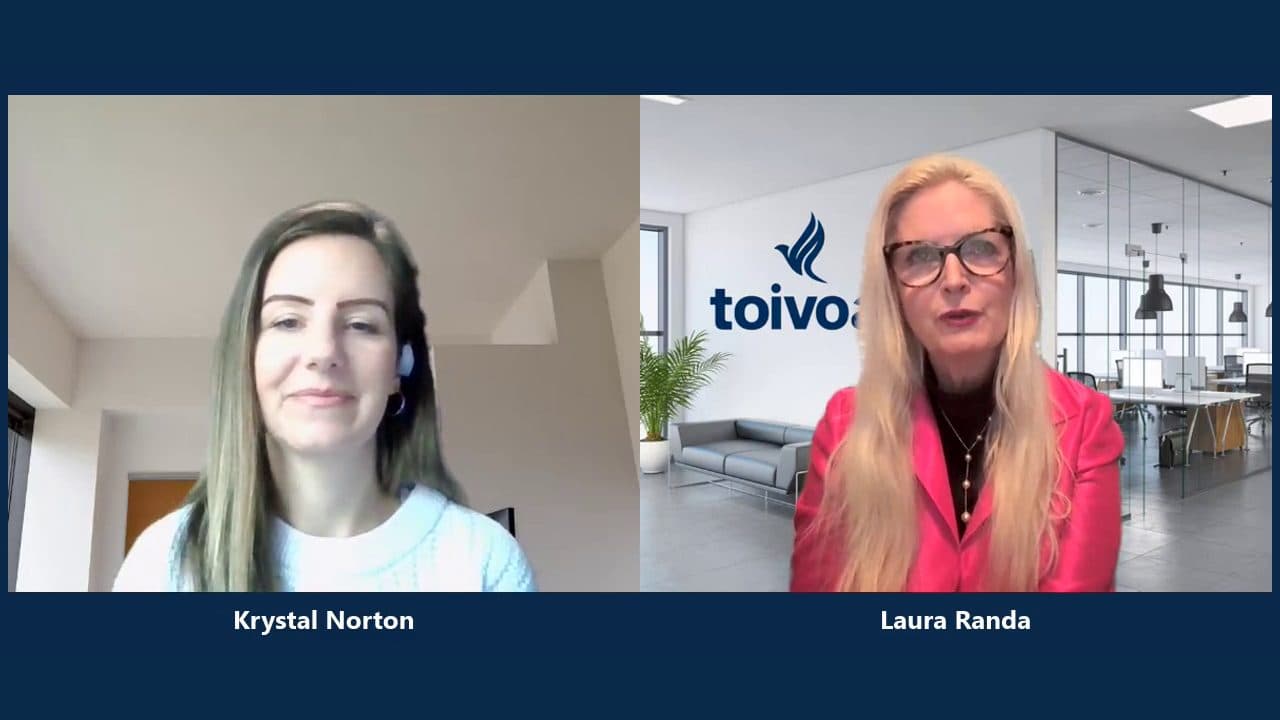
Meet Krystal Norton, cohort 5

Read the transcript

Laura Randa: Hi, Krystal. I’m so looking forward to our conversation today. Thanks for joining me. We’re really excited that you were part of our cohort 5, but really more significantly, it was really our kickoff with really integrating into the military spouse community. And really, you took the leadership on so many different avenues, and I’m so excited about talking about that today. So thanks for joining me.

Krystal Norton: Yeah, of course.

Laura Randa: So, you know, there’s lots and lots of training programs out there for you to choose from. When you were selecting which training program might fit best for you and your lifestyle, why did you choose Toivoa Coaching Academy?

Krystal Norton: And also, I really liked that there was support for military spouses and veterans, just the same, because I’m also a veteran and a military spouse. So that really resonated with me.

Laura Randa: And I think, you know, our mission certainly is around, right? Exactly what you said: serving those that served, you know, served us for so many years. And we’re so thankful for your service and your husband’s service. And we really feel strongly that coaches with shared life experience is so important. So thank you so much for that. What inspired you to have a career in health coaching?

Krystal Norton: Well, I think my life inspired me. I’ve been through a lot of transition in life, and I really felt like coaching and having a space to hold for others was really important for me. Yeah, I’ve lived through periods of transition where I learned that external pressure and advice wasn’t what created change. It was more about our self-trust than anything.

Laura Randa: About that, right? We have to trust ourselves, where the real work and the real transformation has happened. And so with that in mind, that self-trust, and then pivoting over to, you know, think about a client working with a coach. How do you think the training… and you just finished phase one, we’re so excited about you being part of the Toivoa Coaching family right now. Tell me how the training that you went through in those 10 weeks, how did that possibly impact how you may coach future clients?

Krystal Norton: I think one of the biggest shifts for me was understanding how important it is to kind of step back from offering validation in, like, the traditional sense. So at first, it felt counterintuitive to not say things like, “I think you did great.” And I actually had an epiphany moment during class where I was grappling with the idea that you couldn’t say, “I think you did great.” Instead, it’s, “Wow, you did great. How does that make you feel?” And I realized that when we tell people, “I think you did great,” it’s our preference of what we believe is great, not so much what they think is great. And so sometimes I feel like when you get outside validation, it causes us to almost pause and not continue whatever it was that we were doing. Does that make sense?

Laura Randa: But change really happens, which I think is really what you’re saying is correct, right? When we realize it was for a positive component. And I think, you know, I love that that’s what you said. It wasn’t what you said, but it’s what the client actually, you know, through the coaching experience. And that’s such an important component.

Krystal Norton: It showed me how capable people are when they’re supported in trusting themselves rather than outside validation. Although, you know, it feels good to be validated through others and things like that. But internally, it’s most important.

Laura Randa: Right. The change has to come from within. So that’s so important. What do you think your favorite part of the Toivoa Coaching experience is so far? I know you’re still stepping into the program and studying for the exam to become the coach. But first part of it, what was your favorite part?

Krystal Norton: It wasn’t just about, like, learning the techniques. It was about becoming more present, more curious and more grounded as a coach. And I really enjoyed the instructor, Dr. Brenda. She was great. And I just appreciated her consistency in modeling the very principles that we were learning. And it just made the experience feel really cohesive and intentional.

Laura Randa: Can you remember, like, one of those moments, whether Dr. Brenda had taught a new concept, or where you kind of realized that aha button, kind of that epiphany you talked about earlier, saying this is the right path for me? Becoming an NBC-HWC coach.

Krystal Norton: I don’t think I had one moment that she said something, but I think it was when I kept asking the same question: why don’t we validate others? Like, why don’t we say, “I think you’re doing great”? And her continuing to try to explain it to me. And then whenever I had that aha moment outside of class, and I was able to relate it to her and share it with our class, it felt really good, because it was like telling her, now I understand what you’re saying. Now I understand what you’re teaching. I completely understand beyond the shadow of a doubt. Yeah, that was probably the biggest moment of all.

Laura Randa: Great. What do you think, from your experience and looking at other training programs, what do you think, Toivoa Coaching Academy: how do you think it differs from other training programs, that kind of makes it special about focusing in the military populations?

Krystal Norton: Well, first, I think that it’s really important that spouses have an opportunity to gain training, because people like me, I was a stay-at-home mom for 10 years. And within a 10-year time frame, I didn’t earn any credentials, no schooling, no awards ceremonies were for me. I supported my husband solely in his career. And so having the opportunity to learn and to go through a schooling program such as yours, it’s really the whole purpose. The autonomy, regaining your autonomy, your self-efficacy, and saying, you know what, it’s my turn. I raised our family. I supported you through your career, and now I get to do something for me.

Laura Randa: Well, we really thank you, because you were kind of the pioneer in helping us really stand out in doing that. So thank you for that. And, you know, I would tell you that probably the hardest job we ever do is being a mom. So don’t ever underestimate raising kids. But being able to say, yep, I did raise my children, I committed to my family, but now it’s something I want to do and I want to focus on this. That’s wonderful. It just warms my heart hearing that. I guess the last question, and then I’ll see if you have any last comments to add, is: if somebody’s on that fence, there’s, you know, 136 or so programs of NBHWC right now. People could go to universities or other small organizations. If they’re on the fence, why should they choose Toivoa Coaching Academy?

Krystal Norton: Well, I’d say that if you’re drawn to helping people create meaningful self-directed change, the program gives you both the structure and the philosophy to do that really well. I think that Toivoa doesn’t just prepare you to coach. It helps you understand why coaching works and how to practice in a way that’s ethical and non-judgmental. And in a world that we live in, I think that non-judgment, or non-judgmental spaces, are really important.

Laura Randa: Building that self-autonomy again. Thank you for saying that. Thank you for being part of cohort 5. Any last comments that you might want to say to anybody that’s thinking about becoming a coach, a board-certified coach, which is one of those growing healthcare fields right out there right now? We have a shortage in a lot of healthcare providers right now, and we know that first off the bat, what we’re really focusing on is mental health; pain is going to be right after it. But we know that, especially with mental health, there’s a shortage, and we really believe that coaching can really help support so many people. Any last comments that we didn’t cover?

Krystal Norton: I think that it’s really important for people to know that if you’re going to be a health and wellness coach, you’re going to change lives in a big, meaningful way. And not just change lives because you changed their life, but you helped them change their life. And that’s the most meaningful thing we can do: help people live the life they deserve to live.

Laura Randa: I love that. Thank you so much, Krystal, for being a part of this. We’re really excited because, you know, we want to find more of you as part of our program, and we’re really excited about that. So thank you so much for taking some time out of your day to join us today, and so excited that you graduated in cohort 5, and we’re so excited to follow the rest of the journey to your becoming an NBC-HWC coach.

Krystal Norton

Veteran and military spouse, cohort 5, in conversation with Laura Randa

“It wasn’t just about learning the techniques. It was about becoming more present, more curious and more grounded as a coach.”
“My desire to become a mental health coach reflects my passion for service, my commitment to supporting others, and my belief in the importance of mental well-being.”
Kofa Freeman, Toivoa Mental Health Coach

Kofa FreemanToivoa Mental Health Coach

“I meet the patients where they’re at, and help in areas such as cognitive restructuring, guided discovery, journaling, and thought records.”
Christopher King, Director of Toivoa Coaching Academy

Christopher King, MS, NBC-HWCDirector of Toivoa Coaching Academy

“I stand at the threshold of possibility, ready to weave threads of compassion and understanding into the tapestry of human experience.”
Sparrow Sutton, NBC-HWC, Toivoa Mental Health Coach

Sparrow Sutton, NBC-HWCToivoa Mental Health Coach

“I recommend Toivoa Coaching Academy over any other program because it doesn’t just teach you how to coach. It equips you to truly change lives.”
Arslan, Toivoa Coaching Academy graduate

ArslanToivoa Coaching Academy graduate

“Flexibility was huge for me as a working mom to be able to succeed in this program.”
Brittany, Toivoa Coaching Academy graduate

BrittanyToivoa Coaching Academy graduate

Next cohort: January 4, 2027Free Health Coach Career Webinar